

Career Intelligence
March 2026
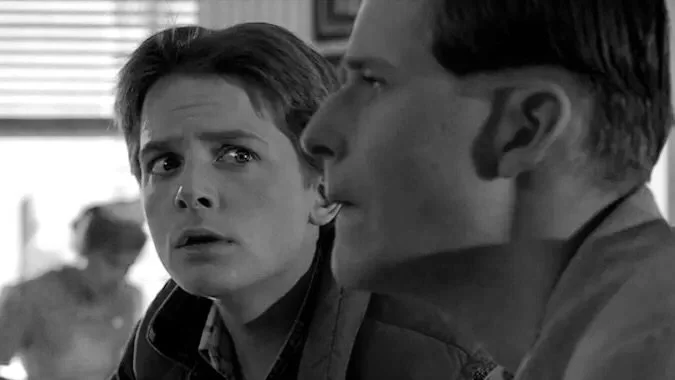
There's a scene in Back to the Future where Marty McFly arrives in 1955 and watches his father make exactly the same mistakes he'll still be making thirty years later. Same situation. Same response. Same outcome. Nobody intervenes. Nothing changes.
I think about that a lot. Because the same pattern keeps repeating in hiring — and I've watched it play out across three decades of my own.
A candidate take a role that looks right on paper. The job spec fits. The interview goes well. But a while later, it’s not working for the person. Not because they lack ability. But because nobody - at any point in the process - built a clear enough picture of whether there was genuine alignment between the person and the role beyond skills and experience.
So, sooner or later, the candidate is back in the market and the employer is looking to hire again. The cycle starts again. Good people. Wrong fit. Avoidable.
And it’s getting worse, not better
The BBC published a story last week into whether AI interviews are making it harder to get a job. What struck me wasn’t the debate about AI fairness: it was that candidates now routinely use AI tools to pass AI screening. In other words, we’ve created a hiring system so detached from people that both sides are now operating through a proxy.
That’s not progress. That’s the misalignment problem in a new suit. For the business it’s expensive. For the individual, it’s months or years of their career.
What I kept trying to do
Here’s what I learned leading during three decades in recruitment: the best placements were never the result of matching a CV to a job description. They came from really knowing someone. Understanding how they worked under pressure. What they needed from a manager. What inspired them their energy and what drained it away. The kind of things that don’t show up on a LinkedIn profile.
So I tried, deliberately, to take the long view. To treat every conversation as part of a longer relationship, not a transaction. To build a picture of someone over time — across roles, across stages of their career — rather than assess them fresh at each moment they came to me.
And to be fair, many of the best consultants do that. They held onto those relationships. They remember. They join the dots across years rather than just responding to the immediate brief.
But it's fragile. That knowledge lives in people’s heads. It was only as good as the individual relationship and it doesn't easily transfer or compound. When someone’s circumstances changed - new ambitions, different priorities, a redundancy - the depth of understanding we’d built wasn’t always where it needed to be to give them genuinely useful guidance rather than just good intentions.
The gap has a name
What’s consistently been missing is career intelligence.
Not recruitment intelligence. Career intelligence is a continuous, cumulative picture of how you work. What drives you. How you perform under pressure. Where you find energy and where you lose it. The kind of understanding that builds over time, not something captured in a single interview or a personality test taken on a Tuesday afternoon.
Careers aren’t events. They’re trajectories. And the system we’ve built: designed to match people to jobs at one moment in time is not really equipped to support decisions that play out over decades.
It feels different now
For most of my career building that understanding at scale was slow, expensive, and too dependent on individual judgment to survive beyond a single relationship.
That’s no longer the case. Behavioural science, longitudinal data, and AI now make it possible to turn the longitudinal view from exceptional to structural. Not a snapshot. Not a score. A developing picture of how you work and where you’re most likely to succeed, that gets sharper the longer it runs.
That’s the thinking behind Hike , which I’m involved in building. Hike is a career intelligence service not a job search platform, not a screening tool - built to help you understand yourself more deeply over time, so the decisions you make about your career are grounded in something more solid than instinct and opportunity.
It’s the thing I was trying to do at Sellick Partnership for twenty-two years. We did it as well as the tools and the times allowed.
Now the tools are catching up.